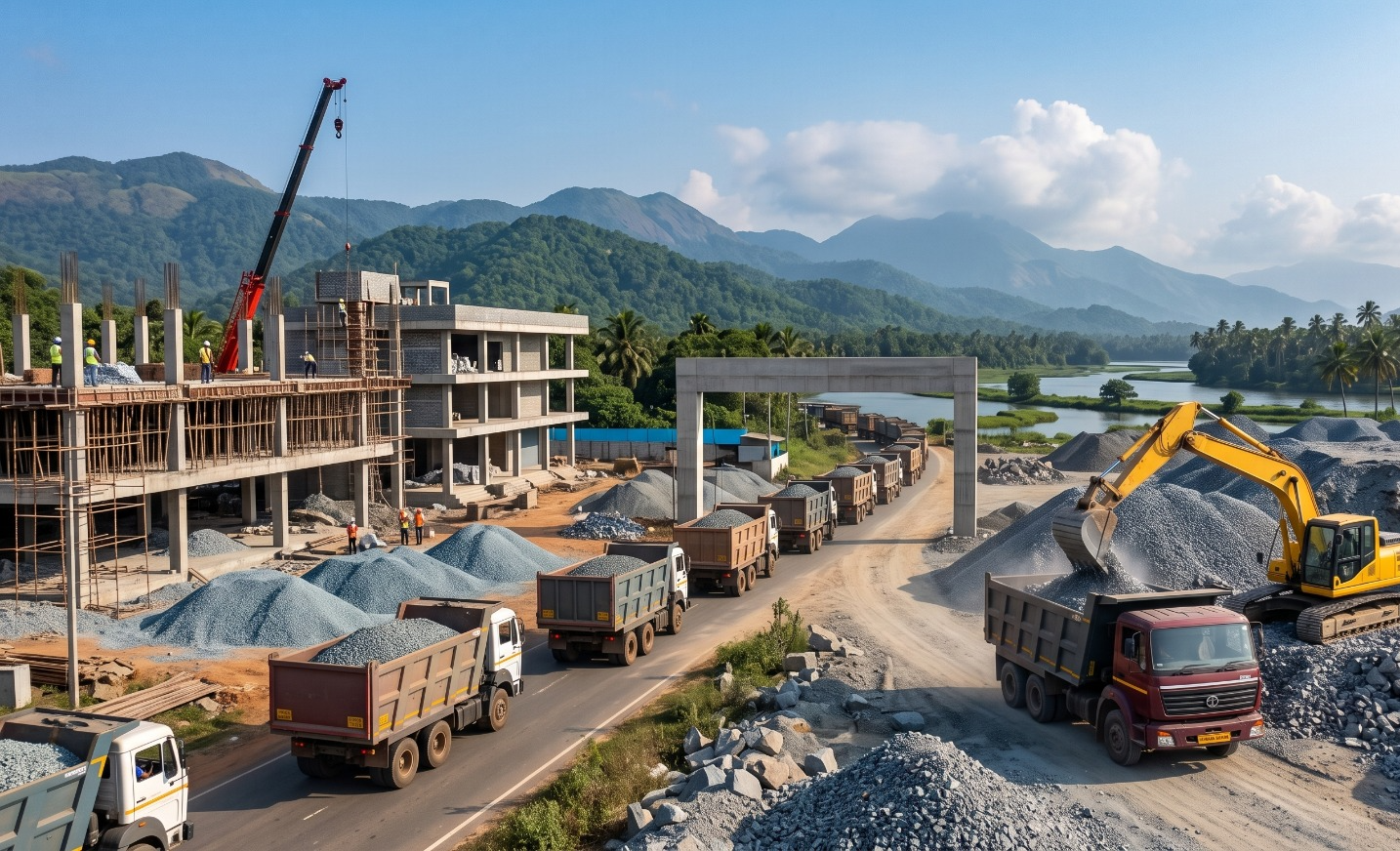
Kerala Construction Sector
Could Get Relief as Tamil Nadu Considers Easing Stone Aggregate Transport Ban
Kerala’s
real estate and construction sector could receive a major boost if Tamil Nadu
relaxes restrictions on transporting stone aggregates and quarry materials into
the state.
A recent
development involving the governments of Kerala and Tamil Nadu could help ease
one of the challenges affecting construction activity in Kerala. According to a
report by The Times of India, Tamil Nadu Chief Minister C. Joseph
Vijay has promised to consider exempting Kerala from the state’s
restrictions on transporting stone aggregate and quarry materials used for
construction.
The issue
was raised by Kerala Chief Minister V. D. Satheesan during a meeting
with Vijay on the sidelines of the Southern Zonal Council meeting in
Mahabalipuram. Kerala highlighted the state’s special circumstances and
requested that the restrictions be reconsidered.
Why Stone Aggregate Supply Matters to Kerala Real
Estate
Stone
aggregate is an essential construction material used in concrete, roads,
foundations, buildings and major infrastructure projects. Any disruption in its
availability can have a direct impact on construction schedules and project
costs.
Kerala
has a strong dependence on construction activity, with residential projects,
commercial buildings, highways, ports and other infrastructure projects
requiring a continuous supply of construction materials.
If the
supply situation improves, developers and contractors could benefit from
greater availability of materials and potentially better control over
construction timelines.
Vizhinjam Port and NH-66 Projects Affected
The
restrictions have reportedly affected major infrastructure works in Kerala,
including the Vizhinjam port project and NH-66 development.
These
projects are strategically important for Kerala's future connectivity and
economic growth. Faster progress on major infrastructure can also influence
surrounding real estate markets by improving accessibility, connectivity and
investment potential.
Infrastructure
development often creates a ripple effect in nearby areas. Improved roads,
transportation links and commercial activity can increase demand for
residential, commercial and land properties over time.
Potential Impact on Kerala's Property Market
If the
restrictions are eased and the movement of stone aggregates resumes more smoothly,
the impact could extend beyond large infrastructure projects.
1. Construction projects could move faster
Better
availability of essential construction materials can help developers maintain
project schedules and reduce delays caused by material shortages.
2. Construction cost pressure could ease
Transportation
restrictions and supply shortages can increase the cost of construction
materials. Improved supply could help stabilize material prices, although the
actual impact will depend on transportation costs, quarry production and market
demand.
3. Housing projects could benefit
Residential
construction across Kerala depends heavily on the availability of aggregates
and other building materials. Improved supply conditions could support ongoing
villa, apartment and independent-house projects.
4. Infrastructure-led real estate growth
Projects
such as NH-66 and Vizhinjam can create new opportunities around improved
transport corridors. Areas benefiting from better connectivity may become
increasingly attractive to property buyers and investors.
5. Commercial development may increase
Improved
infrastructure can encourage businesses, warehouses, retail outlets,
hospitality projects and other commercial developments along important
transport corridors.
What This Could Mean for Property Investors
For real
estate investors, infrastructure and construction-material availability are
important factors to watch.
A
combination of better material supply, major highway development, port
expansion and improving connectivity could support long-term property growth
in strategically located parts of Kerala.
However,
investors should evaluate individual locations based on infrastructure
timelines, accessibility, land-use regulations, project approvals and actual
market demand rather than relying solely on infrastructure announcements.